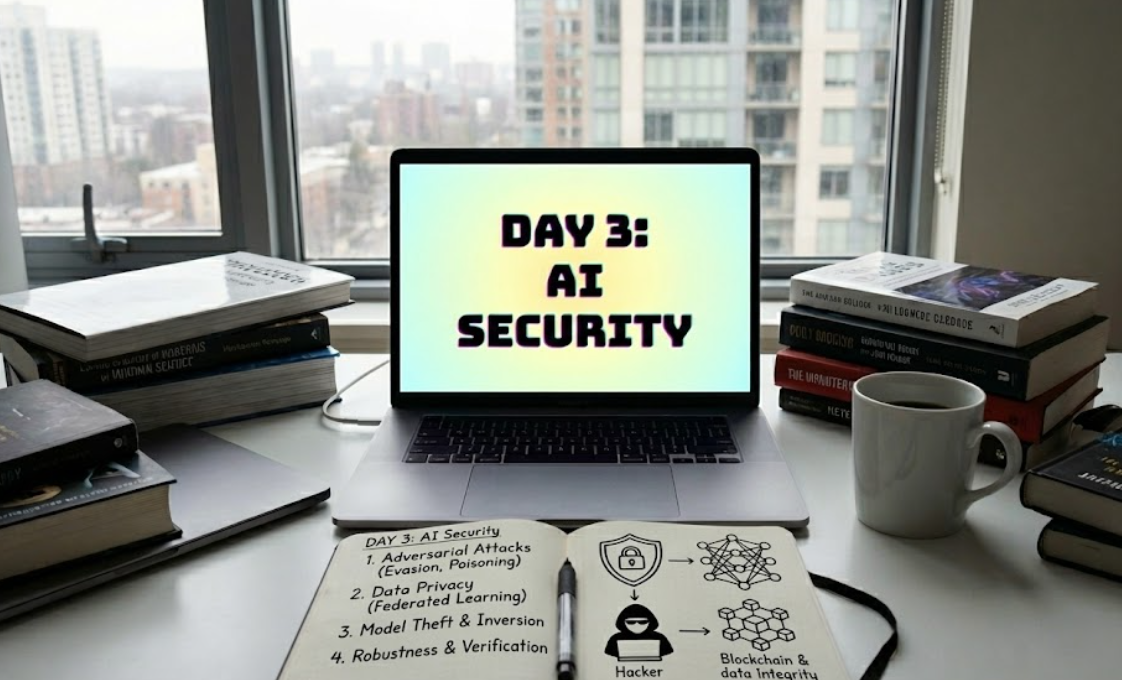
Lets start our blog with a proverb
“Trust is the new currency, untrustworthy AI fails”.
If AI systems can make decisions, they can also be attacked, manipulated or misused.
1. WHAT is AI Security?
AI Security is the practice of protecting AI systems from attacks, misuse, manipulation and failures, while also ensuring that AI itself doesnot become a security threat.
In one line, AI Security = Security AI + Security with AI.
2. Why Traditional Cybersecurity is Not Enough?
The cybersecurity practices which were are following now, only focuses on servers, networks, applications and databases.
But AI systems introduces new attack surfaces like training data, ML models, prompts, model outputs etc.
That’s why AI security is a new domain, not just an extension of cybersecurity.
3. AI for Security VS Security for AI
At first glance, we all assume both “AI for Security” and “Security for AI” as same, but they are not.
AI for Security
Here, AI for Security means we are using AI to protect systems.
Just think “AI is helping humans do cybersecurity better”.
Examples :
AI detecting malware
AI spotting phishing emails
AI identifying network intrusions
Security for AI
Taking security measures for protecting AI systems themselves.
Just think “Hackers attacking the brain instead of the server”
Examples :
Poisoning training data
Attacking an AI model to misclassify images
Injecting malicious prompts into ChatGPT like systems
4. Threat Surface of AI Systems
Imagine threat surface is every place where an attacker can interact with or exploit a system.
AI systems have a much larger threat surface than normal software.
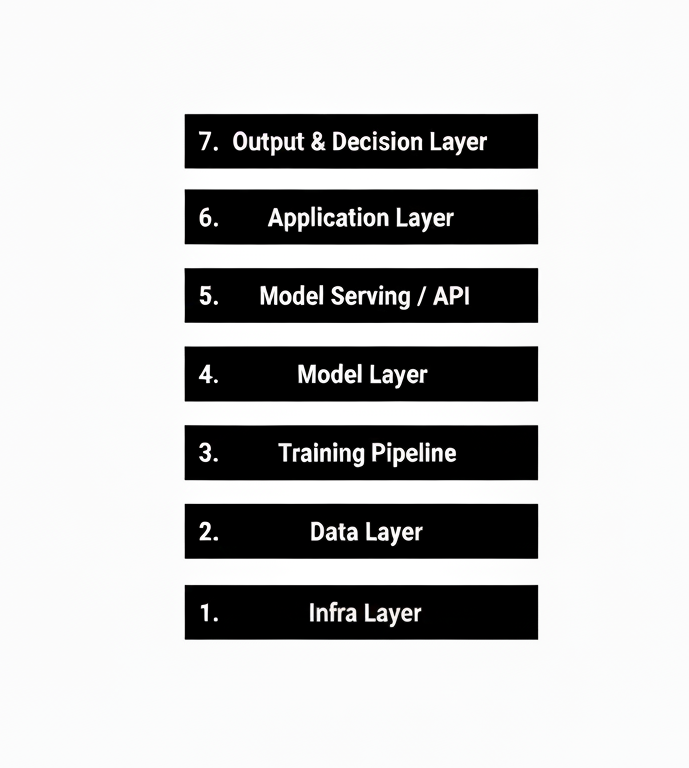
I know it is little overwhelming to grasp all the AI Security keywords in one day, we will try to understand each and every layer in depth day by day.
As of know, the main objective is to have an overview of Threat Surface Layers.
1. Infrastructure Layer
It includes cloud servers, GPUs/TPUs, storage buckets, containers and Kubernetes.
AI infra is expensive and powerful, making it a prime target.
Common Threats :
GPU hijacking (crypto mining)
Credential leakage
Misconfigured storage buckets
Example : Attackers steals API keys and uses your GPUs to train their own model.
2. Data Layer
It includes training data, validation/test data, user input data.
Common Threats :
Data poisoning
Label flipping
Backdoor injection
Example : Poisoning a face recognition dataset so one face is always misidentified.
3. Training Pipeline Layer
It includes data preprocessing scripts, feature engineering, training code.
Common Threats :
Malicious training scripts
Backdoored checkpoints
CI/CD manipulation
Example : A malicious library modifies training behavior silently.
4. Model Layer
Also known as Brain Layer
It includes architecture design, fine-tunes models, third-party models.
Common Threats :
Trojan triggers
Backdoored models
Model extraction
Example : A model behaves normally except when a specific pattern appears.
5. Model Serving / API Layer
It includes REST APIs, SDKs, Rate limiting logic
Common Threats :
Prompt abuse
Denial of Wallet
API key abuse
Example : Attacker sends thousands of queries to reconstruct your model
6. Application Layer
Where user interacts with AI system.
It includes web apps, chatbots, mobile apps etc
Common Threats :
Prompt Injection
Indirect prompt injection
Context Manipulation
Example : Hidden text in a webpage alters the chatbot’s response
So.. guys thats it for today
See you on Day 4 😉