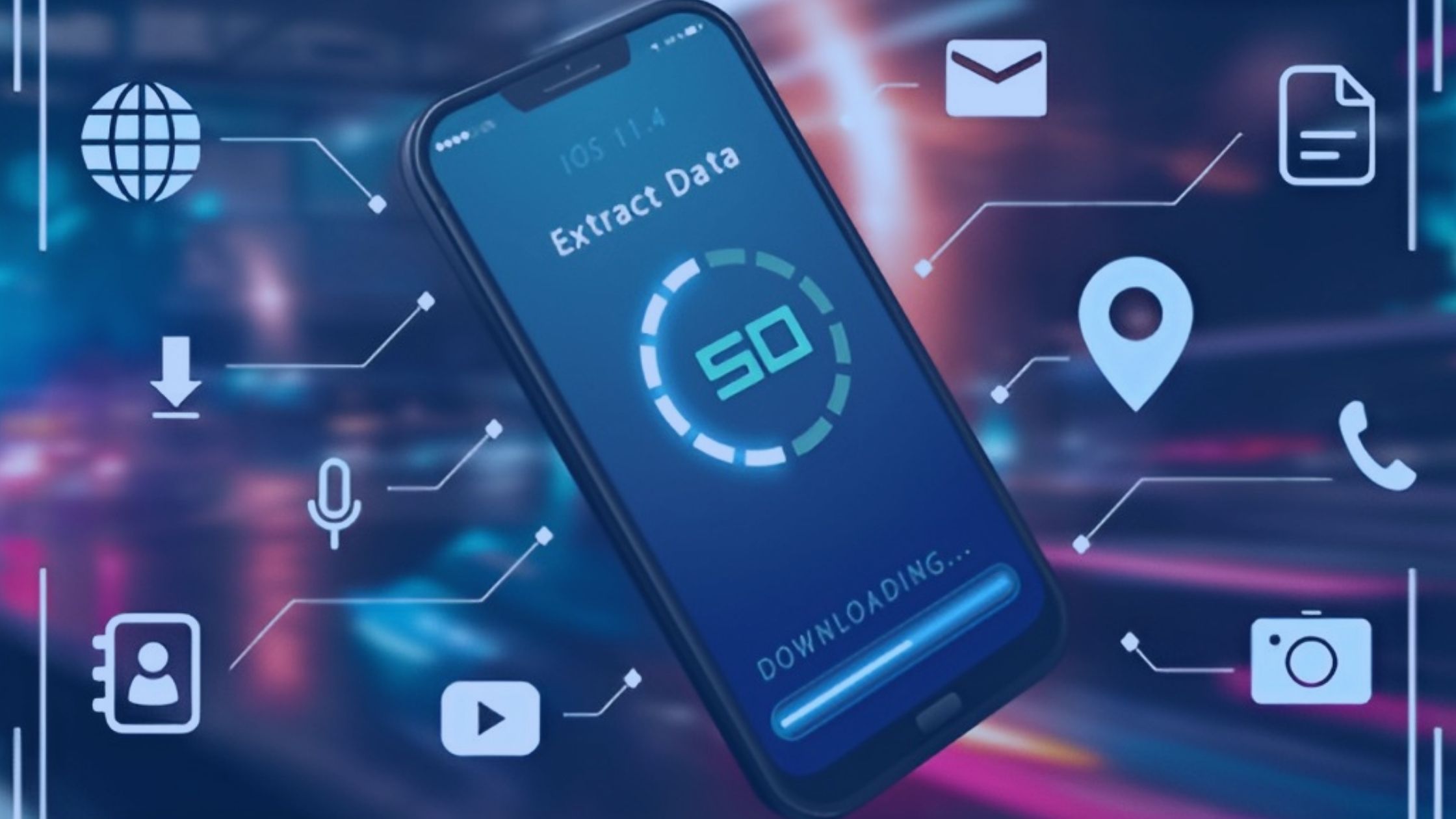
Smartphones have become a central part of our daily lives.
We use them to communicate, store photos, browse the internet, manage finances, and access social media. Because of this, mobile devices often contain a huge amount of valuable digital evidence.
In many cybercrime investigations today, smartphones are one of the most important sources of information.
This is where mobile forensics comes into play.
Mobile forensics is a branch of digital forensics focused on collecting, preserving, and analyzing data from mobile devices such as smartphones and tablets.
Let’s take a closer look at how investigators extract evidence from mobile devices.
What is Mobile Forensics?
Mobile forensics involves recovering and analyzing digital evidence from mobile devices.
This process may include examining:
Because smartphones store such a wide range of information, they can provide critical clues during investigations.
Why Smartphones Are Valuable Evidence Sources
Modern smartphones constantly generate and store data.
Even simple activities like sending a message or opening an app create digital records.
Investigators may find useful evidence such as:
deleted messages
app usage history
GPS location records
contact lists
stored media files
These artifacts can help reconstruct events and reveal communication between individuals.
Steps in a Mobile Forensic Investigation
Mobile forensic investigations usually follow several key steps.
1. Seizing the Device
The first step is securing the device in a way that prevents data from being altered or remotely erased.
Investigators may place the device in a Faraday bag, which blocks network signals and prevents remote access.
2. Data Extraction
Next, investigators use specialized forensic tools to extract data from the device.
Extraction methods may include:
logical extraction
file system extraction
physical extraction
These techniques allow analysts to obtain data stored within the device without modifying the original evidence.
3. Data Analysis
Once the data is extracted, investigators analyze it to identify relevant evidence.
This may involve reviewing:
The goal is to build a clear picture of the device’s activity.
Tools Used in Mobile Forensics
Several specialized tools are used in mobile forensic investigations.
Some commonly known tools include:
These tools allow investigators to extract and analyze data from different types of mobile devices while maintaining forensic integrity.
Challenges in Mobile Forensics
Mobile forensic investigations can sometimes be complicated.
Modern smartphones often include security features such as:
device encryption
secure storage
biometric authentication
These protections are designed to protect user privacy but can also make forensic analysis more difficult.
As mobile technology evolves, forensic techniques must continuously adapt.
Final Thoughts
Smartphones hold a vast amount of personal and digital information.
Because of this, they often become key pieces of evidence during cybercrime investigations.
Mobile forensics helps investigators recover and analyze this data while preserving the integrity of digital evidence.
As mobile devices continue to play a larger role in our digital lives, mobile forensics will remain an essential part of modern cybersecurity investigations.
#WRAP