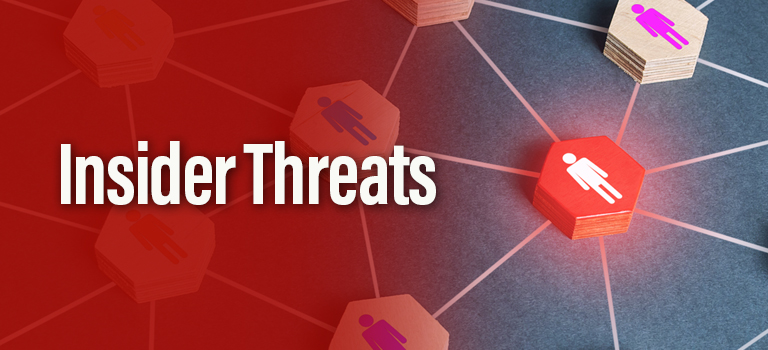
When people think about cyber attacks, they often imagine external hackers trying to break into systems.
But sometimes, the biggest threat isn’t outside the organization…
It’s already inside.
These are known as insider threats. Security risks that come from people who already have access to systems, such as employees, contractors, or trusted partners.
And because they already have access, detecting them can be much more difficult.
What is an Insider Threat?
An insider threat occurs when someone within an organization misuses their access to harm the system, data, or operations.
This doesn’t always mean malicious intent.
Insider threats can be:
Malicious → intentionally stealing or leaking data
Negligent → accidentally exposing sensitive information
Compromised → account taken over by an attacker
In all cases, the danger comes from someone who is already trusted.
A Simple Real-World Scenario
Imagine an employee working in a company with access to internal files.
Over time, they start copying sensitive data to a personal device.
Maybe they plan to sell it.
Maybe they’re leaving the company.
Or maybe they just don’t realize the risk.
From the outside, everything looks normal.
But internally, a serious data breach is happening.
This is what makes insider threats so dangerous . They often blend in with normal activity.
Why Insider Threats Are Hard to Detect
Unlike external attackers, insiders already have:
This means their actions don’t always look suspicious at first.
For example:
accessing files (which they are allowed to do)
downloading data (part of their job)
logging in during working hours
The difference lies in patterns and intent, not just actions.
How Investigators Detect Insider Threats
Digital forensic investigators rely on behavior analysis and logs to detect insider threats.
They look for unusual patterns such as:
accessing files outside normal work hours
downloading large amounts of data
accessing systems unrelated to their role
repeated access to sensitive information
By analyzing logs and user activity, investigators can identify behavior that doesn’t match normal usage.
Tools and Techniques Used
Organizations use various tools to detect insider threats.
Some common methods include:
- User Activity Monitoring
- Data Loss Prevention (DLP) systems
- Log analysis tools (like SIEM systems)
- Access control and permission tracking
These tools help track what users are doing within the system.
The Role of Digital Forensics
When an insider threat is suspected, forensic investigators analyze:
system logs
file access history
email communication
device usage
data transfers
This helps answer questions like:
What data was accessed?
Was any data stolen?
When did the activity start?
Was it intentional or accidental?
Preventing Insider Threats
Organizations take several steps to reduce insider risks.
Some common practices include:
limiting access based on roles
monitoring user activity
implementing strong authentication
training employees on cybersecurity awareness
The goal is to reduce unnecessary access and detect suspicious behavior early.
Final Thoughts
Insider threats remind us that not all cyber risks come from unknown hackers.
Sometimes the danger comes from within. From trusted users who misuse access, either intentionally or accidentally.
Detecting these threats requires careful monitoring, strong security policies, and detailed forensic analysis.
Because in cybersecurity, trust alone is not enough…….
it must always be supported by verification.
#WRAP