Checklist-based scanning has its place, but anyone who’s done real penetration testing knows that the most dangerous vulnerabilities rarely show up as a clean line item on an OWASP Top 10 report. Business logic flaws, chained exploits, and authentication bypasses require tools that go deeper than surface-level pattern matching.
Beyond Checklists: Finding True Application Risk
Real-world risk detection means understanding how an attacker would actually move through an application, not just whether individual endpoints respond predictably to known payloads. This requires tools capable of authenticated, multi-step testing that mirrors genuine attacker workflows.
The BreachLock 2024 Penetration Testing Intelligence Report, analyzing over 4,000 engagements, found broken access control in 32% of high-severity findings, with IDOR ranking third among the most frequently identified vulnerability types in web application testing.
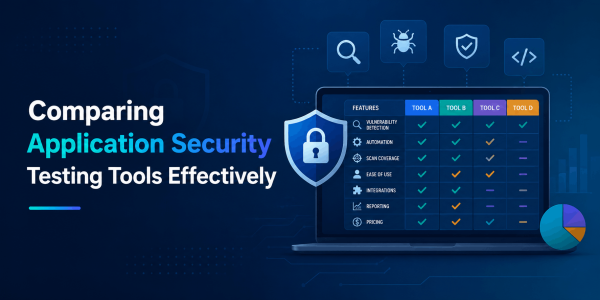
When comparing application security testing tools effectively, researchers need to look past raw vulnerability counts and toward how well a tool validates exploitability, reproduces findings, and handles complex, stateful application flows.
Analyzing Real-World Risk Profiles
ZeroThreat.ai
ZeroThreat.ai’s Agentic AI executes adaptive attacker workflows that go well beyond static payload testing. It chains together multiple steps, authentication, session handling, and sequential requests, to simulate complex, multi-step attack paths the way a human attacker would approach an application.
Rather than testing endpoints in isolation, it actively probes for business logic abuse, looking for ways legitimate functionality can be misused to achieve unintended outcomes.
For researchers, this means ZeroThreat.ai can serve as a force multiplier during deep exploit validation. Its validation-first approach means findings come with proof of exploitability, including the actual request sequence used, eliminating the false-positive noise that often plagues researchers sifting through automated scan results. This frees up manual testing time to focus on the truly novel logic flaws that require human creativity rather than re-confirming what a scanner already validated.
Burp Suite
Burp Suite remains the industry-standard intercepting proxy for a reason. Its core methodology revolves around sitting directly in the traffic path between browser and server, giving testers complete visibility into every request and response, including ones that client-side code might try to hide.
Combined with Burp Intruder’s customizable attack automation, testers can fuzz parameters, brute-force authentication, and run targeted payload sets against specific endpoints.
In a deep exploit validation context, Burp’s value is in granular control. For manual exploitation and chaining vulnerabilities across multi-step flows, the visibility Burp provides is difficult to replicate with purely automated tools. Researchers can intercept a request mid-flow, modify parameters on the fly, and immediately observe how the application responds, making it indispensable for confirming exactly how a vulnerability can be weaponized.
Checkmarx
Checkmarx One’s methodology centers on unified SAST, DAST, and API testing that analyzes both source code and runtime behavior. Its static analysis engine traces data flow through an application’s codebase, identifying where untrusted input reaches sensitive operations like database queries or system commands.
This makes it well-suited for analyzing complex, distributed systems where vulnerabilities often hide across service boundaries and aren’t visible from any single component alone.
For researchers working with enterprise codebases, Checkmarx’s code-level analysis can surface exposures that runtime testing alone might miss, particularly in code paths that are difficult to reach through normal application use. This combination helps map hidden attack surfaces before runtime exploitation begins, giving testers a prioritized list of code locations worth investigating manually.
Veracode
Veracode’s methodology combines static analysis, dynamic testing, and software composition analysis into a centralized risk view across an organization’s application portfolio. Its risk prioritization engine scores findings based on exploitability and business context rather than raw severity alone.
This brings robust risk prioritization to deep testing workflows, particularly valuable when triaging large volumes of findings across enterprise applications with many services.
Its software composition analysis adds visibility into third-party component risk, flagging known-vulnerable libraries that might otherwise go unnoticed during manual testing. Centralized vulnerability management helps researchers and teams track findings across long-running engagements without losing context, which matters when an assessment spans weeks and involves multiple testers working different parts of the same application.
Rapid7
InsightAppSec’s methodology relies on a continuous DAST engine covers 95+ attack types, crawling applications and APIs to identify exploitable issues across authentication, injection points, and session management. The scanner adapts its crawl based on application structure, attempting to map dynamic content and single-page applications.
Its Attack Replay capability is particularly useful for validation, letting testers reproduce findings reliably to confirm exploitability before reporting, rather than relying on a static description of the issue.
For exploit validation workflows specifically, this reproducibility matters when communicating findings to development teams who need clear proof before prioritizing fixes. A researcher can hand off a replayable attack sequence rather than a narrative description, removing ambiguity about whether an issue is real and how to trigger it.
Enhance Security with the Right AppSec Tool
No single tool replaces skilled manual testing, but the right combination dramatically improves efficiency. AI-driven validation tools like ZeroThreat.ai can triage and confirm exploitable issues at scale, freeing up manual testing time for the business logic flaws that require human creativity.
Pairing automated breadth with manual depth, and validating findings through replay or proof-based reporting, remains the most reliable path to genuine risk reduction.
Conclusion
Real-world risk detection isn’t about running more scans, it’s about running the right combination of tools that reflect how attackers actually operate. AI-driven validation, deep manual proxying, and enterprise-grade code analysis each play distinct roles in a thorough assessment.
For researchers, the takeaway is simple: prioritize tools that prove exploitability over those that simply count vulnerabilities, and let reproducibility guide what gets reported and fixed first.