Modern penetration testing tools have become much faster at identifying common vulnerabilities. Automated scanning, AI-assisted testing, and dynamic analysis can cover large applications in far less time than traditional manual assessments.
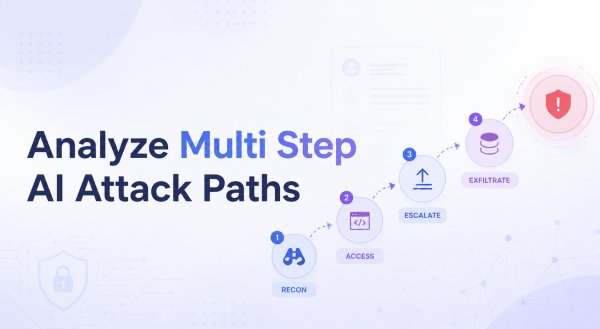
However, attackers rarely compromise applications through a single vulnerable endpoint. Most successful attacks involve multiple actions that span authentication, authorization, APIs, business logic, and user workflows. Looking at each request independently often hides the connections that make an attack possible.
This is why analyzing complete attack paths has become one of the most valuable capabilities in modern AI penetration testing.
Why Traditional Scanners Often Miss Attack Paths
Traditional DAST solutions evaluate requests individually. They are effective at identifying vulnerabilities such as SQL Injection, Cross-Site Scripting, exposed files, and configuration issues.
The limitation appears when vulnerabilities depend on context rather than individual requests. Modern applications rely on authenticated sessions, role-based permissions, state transitions, and business workflows that change as users interact with the system.
This is one of the reasons AI pentesting that identifies real attack paths is becoming increasingly important. Instead of treating every request as an isolated event, this approach connects user actions, permissions, workflows, and application state to reveal security weaknesses that only appear across multiple interactions.
Without understanding these relationships, scanners may generate lengthy reports while overlooking the attack sequences that create the greatest business risk.
Understanding Application Context
Application context refers to the relationships between different parts of an application.
These relationships include:
A request that appears harmless by itself may become exploitable only after several previous actions have been completed.
Understanding these relationships allows security testing to evaluate how attackers actually interact with applications.
How AI Builds Context During Testing
Modern AI does more than crawl pages and collect responses.
As testing progresses, it gradually builds a model of the application by observing:
- Login and authentication flows
- Navigation patterns
- User permissions
- API endpoints
- Session behavior
- Workflow dependencies
Instead of producing isolated findings, AI can determine how one interaction affects another.
This provides a much more realistic representation of the application’s security posture.
Connecting Vulnerabilities Into Real Attack Paths
The biggest advantage of context-aware testing is its ability to combine multiple observations into a complete attack scenario.
Consider this example.
An authenticated user discovers that an API accepts modified object identifiers.
The application exposes another customer’s information.
Further testing shows that administrative functions rely only on client-side role validation.
Finally, sensitive reports become accessible.
Each issue appears moderate when viewed independently.
Together, they form a complete privilege escalation attack that could lead to unauthorized access to sensitive business data.
This type of analysis is difficult for conventional scanners because it depends on understanding relationships across several requests instead of evaluating them individually.
Why Context Produces Better Results
Automated scanners often generate findings that cannot realistically be exploited.
Security teams spend considerable time reviewing these results before determining whether they represent genuine risk.
Context-aware testing improves accuracy by validating whether vulnerabilities are reachable through legitimate application workflows.
Rather than asking only whether a weakness exists, it also evaluates:
- Can the functionality actually be reached?
- Does authentication prevent exploitation?
- Are permission checks consistently enforced?
- Does the workflow allow the attack to continue?
- What business impact would exploitation create?
Answering these questions reduces unnecessary findings while increasing confidence in verified vulnerabilities.
Prioritizing Business Risk Instead of Severity Scores
Technical severity alone does not always represent business impact.
For example, a reflected XSS vulnerability on a public information page may receive a similar severity rating as an authorization failure within an administrative workflow.
In reality, the second issue is often much more damaging.
Context-aware AI considers exploitability, user privileges, workflow importance, and data sensitivity when prioritizing findings.
This helps organizations focus on vulnerabilities that are most likely to affect critical business operations.
Best Practices for Better Attack Path Analysis
Organizations can improve testing coverage by focusing on complete application behavior rather than isolated requests.
Some practical recommendations include:
- Test authenticated user journeys.
- Evaluate multiple user roles.
- Validate authorization throughout entire workflows.
- Analyze APIs together with the web application.
- Reassess workflows after major feature releases.
- Prioritize verified attack paths over raw vulnerability counts.
These practices provide a clearer understanding of real application risk and help reduce blind spots during security assessments.
Final Thoughts
Applications have evolved into complex systems where authentication, permissions, APIs, and business logic work together to deliver functionality. Attackers take advantage of these relationships, moving through applications one step at a time until they reach valuable assets.
Security testing should reflect this reality.
By analyzing complete attack paths instead of isolated vulnerabilities, context-aware AI provides a more accurate understanding of how applications can be compromised. This enables security teams to identify meaningful risks, reduce false positives, and focus remediation efforts on the weaknesses that matter most.