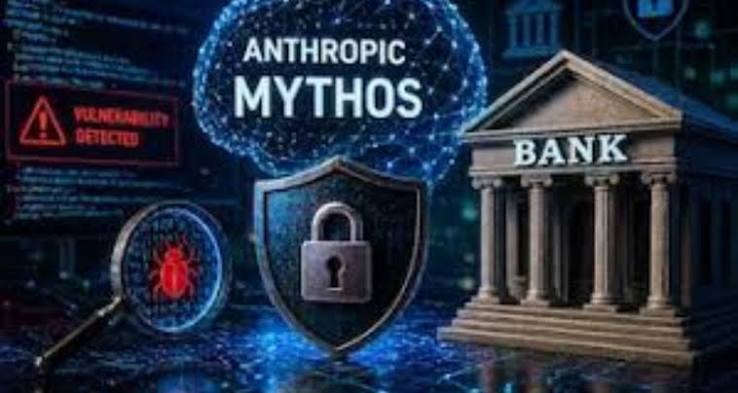
Global financial institutions are reportedly scrambling to assess potential cybersecurity risks following newly surfaced findings associated with the alleged “Mythos” cyber operation, a development that has triggered serious concern across the banking and financial services industry.
Security analysts warn that the revelations surrounding Mythos could have far-reaching implications for banking infrastructure, digital transactions, customer data protection, and third-party financial systems.
As investigations continue, cybersecurity teams across the banking sector are accelerating internal audits, reviewing access controls, and strengthening threat monitoring capabilities.
What Is “Mythos”?
Mythos is reportedly linked to a sophisticated cyber campaign believed to involve advanced intrusion techniques, stealth persistence methods, and potential targeting of financial systems.
While official technical disclosures remain limited, early reports suggest the findings may involve:
- Credential compromise
- Unauthorized network access
- Cloud infrastructure exposure
- Third-party vendor vulnerabilities
- Financial data reconnaissance
- Advanced persistence techniques
Cybersecurity researchers believe the operation may have affected multiple financial-sector environments either directly or indirectly through interconnected supply chains.
Why the Banking Sector Is Concerned
Banks operate some of the most sensitive and highly interconnected digital ecosystems in the world.
A successful compromise within the financial sector can potentially impact:
- Online banking systems
- Payment infrastructure
- ATM networks
- Internal financial operations
- Customer information databases
- Interbank communication systems
Because modern banking relies heavily on cloud services, APIs, vendors, and real-time digital infrastructure, even a limited breach can create cascading operational risks.
The emergence of the Mythos findings has reportedly prompted many institutions to initiate emergency cybersecurity reviews.
Financial Institutions Increase Defensive Measures
In response to the reports, several financial organizations are believed to be strengthening security protocols and conducting rapid threat assessments.
Key defensive actions may include:
- Resetting privileged credentials
- Expanding endpoint monitoring
- Reviewing cloud access permissions
- Increasing SIEM alerting thresholds
- Conducting threat hunting operations
- Verifying third-party vendor security
Cybersecurity teams are also reportedly monitoring for indicators of compromise (IOCs) connected to the Mythos activity.
Third-Party Risk Back Under the Spotlight
The Mythos findings once again highlight one of the financial sector’s biggest cybersecurity challenges: third-party exposure.
Banks rely on extensive external ecosystems that include:
- Cloud providers
- Payment processors
- Fintech integrations
- Identity verification services
- Software vendors
- Managed service providers
Attackers increasingly exploit weaker links within these ecosystems to gain indirect access to larger targets.
Security experts warn that supply chain and vendor-related cyber risks are becoming one of the most dangerous attack vectors facing financial institutions today.
Cybercriminals Continue Targeting Banks
The banking sector remains one of the most attractive targets for cybercriminal organizations due to its direct connection to financial assets and sensitive customer information.
Threat actors targeting banks often seek:
- Financial theft
- Ransomware payouts
- Data extortion
- Insider access
- Fraud opportunities
- Market disruption
Recent years have seen a sharp rise in sophisticated attacks involving:
- AI-powered phishing
- Credential stuffing
- Cloud exploitation
- Business email compromise (BEC)
- Advanced persistent threats (APTs)
The Mythos operation appears to fit within this growing trend of highly coordinated cyber campaigns against financial infrastructure.
Key Cybersecurity Lessons for the Financial Sector
The situation surrounding Mythos reinforces several critical cybersecurity lessons for banks and enterprises.
1. Continuous Monitoring Is Essential
Real-time visibility across networks and cloud environments is critical for detecting advanced threats early.
2. Vendor Security Must Be Prioritized
Third-party access controls and supply chain audits are increasingly important.
3. Zero Trust Architecture Reduces Risk
Banks must continuously validate user identities and device trust levels.
4. Threat Intelligence Sharing Matters
Rapid collaboration between financial institutions and cybersecurity organizations improves sector-wide resilience.
Regulatory Pressure Likely to Increase
Cybersecurity incidents involving financial infrastructure often attract immediate attention from regulators and government agencies.
Industry analysts expect the Mythos findings could lead to:
- Stricter compliance requirements
- Expanded incident reporting obligations
- Increased security audits
- Enhanced cloud security guidance
- Greater scrutiny of vendor relationships
Financial regulators worldwide continue emphasizing cyber resilience as a top operational priority.
Industry Reaction
The cybersecurity community has reacted with urgency to the emerging Mythos-related findings.
Threat intelligence researchers are actively investigating the scope of the operation, while banks and financial service providers continue reviewing their exposure levels.
Many experts believe the incident demonstrates how rapidly evolving cyber threats are forcing financial institutions to modernize defensive strategies faster than ever before.
Final Thoughts
The reported Mythos findings have placed the banking sector on high alert, highlighting the growing sophistication of cyber threats targeting financial infrastructure.
As banks continue digitizing operations and expanding interconnected ecosystems, cybersecurity risks are becoming increasingly complex and difficult to contain.
Whether Mythos proves to be a large-scale coordinated operation or a limited intrusion campaign, the incident serves as another warning that financial institutions must remain vigilant against evolving cyber threats.
The coming weeks may reveal additional technical details, affected systems, and the broader implications of the operation across the global financial industry.