Hardware: Jensen Huang’s "Mystery Chip" Revealed Tomorrow?
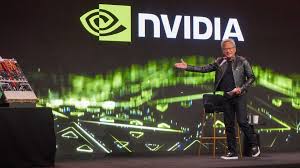
For weeks, NVIDIA CEO Jensen Huang has been playing the role of a high-tech magician. In a series of recent interviews, including one with the Korea Economic Daily, Huang teased that GTC 2026 will unveil "several new chips the world has never seen before" and one specific silicon marvel that will "surprise the world." As the "Blue Team" and "Red Team" prepare to descend on San Jose tomorrow, March 16, the question remains: What is Jensen hiding in his leather jacket?
The Lead Candidate: "Feynman" Architecture Sneak Peek
While 2026 is officially the year of the Vera Rubin platform, industry insiders are betting that the "surprise" is an early prototype of the Feynman architecture.
- The 1.6nm Breakthrough: Feynman is rumored to be the first chip to leverage TSMC’s A16 (1.6nm) process. This isn't just a shrink; it's a leap to "Angstrom-level" manufacturing that uses Backside Power Delivery to solve the thermal and power bottlenecks currently choking 3nm systems.
- The "LPU" Integration: Following NVIDIA's deep-dive into Groq-style logic, Feynman is expected to move away from traditional GPU design toward a Low-Latency Inference model. This architecture is built specifically for "Agentic AI" systems that don't just chat, but reason and act autonomously in real-time.
The "Dark Horse" Reveal: The N1X PC Chip
While GTC is traditionally an enterprise-heavy show, there is growing speculation that the surprise could be NVIDIA’s first serious shot at the Consumer CPU/GPU market.
- Arm-Based Powerhouse: The N1X is rumored to be a custom Arm-based chip for laptops and desktops, designed to take on Intel’s Panther Lake and Apple’s M-series.
- Integrated RTX: Imagine a laptop chip with the raw power of an RTX 5070 built directly into the silicon. If Huang reveals this tomorrow, it would mark the end of the "discrete GPU" era for high end mobile computing.
Hacklido Technical Takeaway: Beyond the Hype
For our engineering and DevOps readers, the real news isn't just the chip, but the Five-Layer Cake of AI infrastructure Jensen is expected to outline:
- Energy Sovereignty: Expect a deep dive into how these chips will power (and be powered by) the new "AI Factories" and the shift toward independent utility-scale energy.
- HBM4 Stacking: We expect a confirmed partnership with SK Hynix to directly stack HBM4 memory onto the GPU logic die, eliminating the "memory wall" that slows down trillion-parameter models.
Physical AI: The keynote will likely showcase Project GR00T updates, using these new chips to bridge the gap between digital simulation (Omniverse) and real-world robotic