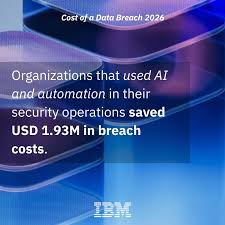
IBM has released its 2026 Cost of a Data Breach Report, offering new insights into the financial impact of cyber incidents on organizations worldwide. The annual report highlights how investments in artificial intelligence (AI), automation, and incident response capabilities are helping organizations detect, contain, and recover from data breaches more efficiently.
According to the report, organizations with mature cybersecurity programs—including AI-powered threat detection, Zero Trust architectures, security automation, and well-tested incident response plans—experienced lower breach-related costs and faster recovery times than those relying on traditional security approaches. The findings also emphasize that ransomware, phishing, third-party compromises, and cloud misconfigurations remain among the leading causes of costly security incidents.
IBM recommends that organizations strengthen cyber resilience by adopting continuous security monitoring, enforcing Multi-Factor Authentication (MFA), conducting regular employee awareness training, and implementing proactive vulnerability management to reduce both the likelihood and financial impact of future breaches.
Key Takeaways
AI and security automation help reduce breach detection and response times.
Zero Trust strategies improve resilience against modern cyber threats.
Ransomware and phishing continue to be major drivers of breach costs.
Incident response planning significantly lowers financial and operational impact.
Why It Matters
The report reinforces that cybersecurity is no longer just a technical requirement—it is a business priority. As cyberattacks become more sophisticated, organizations that invest in proactive security measures and rapid response capabilities are better positioned to minimize financial losses and maintain customer trust.
Conclusion
IBM's 2026 Cost of a Data Breach Report highlights the growing value of AI-driven security, automation, and cyber resilience. Organizations that prioritize prevention, detection, and rapid incident response can significantly reduce the cost and impact of future data breaches.