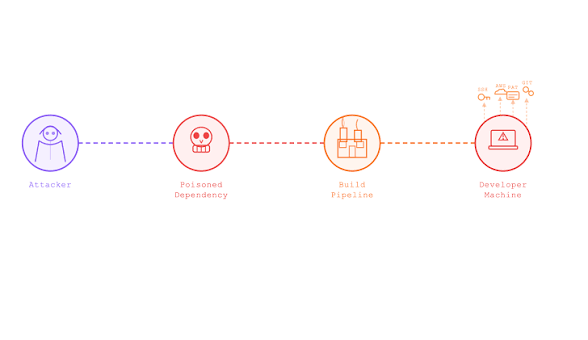
Cybersecurity researchers have uncovered a dangerous wave of software supply chain attacks by threat actors "Megalodon" and TeamPCP. These groups are targeting developer pipelines, open-source ecosystems, and CI/CD environments to inject malicious code, steal credentials, and compromise downstream software at scale.
Why Supply Chain Attacks Are the New Preferred Weapon
Modern software development relies heavily on automation, package managers, and cloud-based deployment. Attackers now understand that compromising one developer environment can impact millions of end users.
The latest operations linked to Megalodon and TeamPCP focus on:
- CI/CD pipeline compromises
- Malicious package injections
- Credential theft from developer tools
- Dependency hijacking
- Git repository infiltration
- Trojanized software updates
- Cloud token harvesting
How the Attack Works
Stage 1: Initial Access
Threat actors gain entry through:
- Phishing campaigns targeting developers
- Stolen Git credentials
- Compromised SSH keys
- Malicious npm or PyPI packages
- Exploited CI/CD misconfigurations
Stage 2: Pipeline Manipulation
Once inside, attackers tamper with build scripts, GitHub Actions workflows, Jenkins pipelines, Docker images, and deployment automation — silently inserting malicious code into legitimate applications.
Stage 3: Persistence and Credential Harvesting
The malware then steals API tokens, cloud credentials, developer secrets, signing certificates, and environment variables — all exfiltrated to remote command-and-control servers.
Stage 4: Downstream Supply Chain Infection
Once poisoned packages are published, every downstream user becomes a potential victim — dramatically increasing the scale of a single breach.
Why Developer Pipelines Are High-Value Targets
Developer infrastructure offers attackers:
- Direct access to production systems
- Sensitive cloud environments
- Software signing mechanisms
- Customer data pathways
- Enterprise infrastructure control
Many organizations still lack proper visibility into their software supply chains, making detection extremely difficult.
Open-Source Ecosystems Under Pressure
Platforms like npm, PyPI, RubyGems, and container registries face repeated attacks through:
- Typosquatting
- Dependency confusion
- Malicious package uploads
- Credential-stealing libraries
- Backdoored updates
Indicators of Compromise (IOCs)
Watch for these warning signs:
- Suspicious outbound API traffic
- Unauthorized Git repository modifications
- Unexpected CI/CD pipeline changes
- Modified package manifests
- Abnormal token generation activity
- Hidden persistence scripts in build environments
Security Recommendations
Secure CI/CD Pipelines
- Enforce multi-factor authentication (MFA)
- Restrict pipeline permissions
- Use isolated build environments
- Monitor pipeline integrity continuously
Protect Secrets and Tokens
- Rotate credentials regularly
- Store secrets in secure vaults
- Avoid hardcoded API keys
- Limit token privileges
Harden Open-Source Usage
- Verify package authenticity
- Scan dependencies continuously
- Use Software Bill of Materials (SBOMs)
- Implement dependency pinning
Monitor for Anomalies
- Detect unusual build modifications
- Watch for unauthorized deployments
- Monitor outbound traffic from build systems
- Audit developer accounts frequently
The Growing Threat Landscape
The rise of Megalodon and TeamPCP signals a broader evolution in cybercrime. Attackers are now targeting the software development lifecycle itself rather than individual endpoints. Security researchers warn that supply chain attacks will likely escalate throughout 2026, especially against organizations with weak CI/CD security and unmanaged third-party dependencies.