OT Infrastructure Under Fire: New Threat Groups Mapping "Physical Effects"
The "air gap" is officially a myth of the past.
As we move deeper into 2026, the target has shifted from stealing databases to manipulating physical reality.
Recent intelligence from Dragos, Mandiant, and CISA reveals a coordinated escalation in attacks targeting Operational Technology (OT) and Critical National Infrastructure (CNI).
Industrial environments are no longer just collateral damage in ransomware spree; they are being methodically mapped for real-world disruption.
The Rise of the "Big Three" Threat Groups
A series of high-profile incidents in early 2026 has been linked to three newly identified threat clusters.
These aren't your typical script kiddies these groups exhibit a deep understanding of proprietary industrial protocols like Modbus/TCP and DNP3.
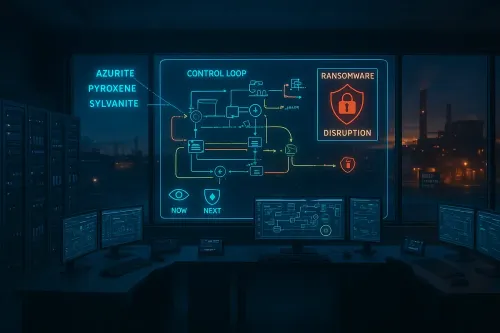
SYLVANITE (The Foothold Specialist): Linked to the infamous Volt Typhoon (VOLTZITE) operations, this group focuses on "Living-off-the-Land" (LotL) techniques to gain persistent access to power utilities. They don't use malware; they use your own admin tools against you.
ELECTRUM (The Disruption Engine): Fresh off attacks against the Polish energy grid that impacted 30 facilities in late December 2025, ELECTRUM has expanded its focus to Decentralized Energy Resources (DERs). Their goal is clear: kinetic impact on the grid.
PYROXENE (The Wiper Architects): Active across the U.S. and Middle East, this group has been deploying destructive wiper malware designed specifically to brick industrial workstations, preventing operators from regaining control during a crisis.
The "Control Loop" Reconnaissance
The most alarming trend for the Hacklido community is the shift in reconnaissance.
Attackers are no longer just looking for "admin/admin" credentials.
They are performing Control Loop Mapping.
By intercepting traffic between Human-Machine Interfaces (HMIs) and Programmable Logic Controllers (PLCs), threat actors are learning the exact thresholds of industrial processes—how much pressure a valve can take, or the specific frequency of a turbine—to induce a "silent" failure that looks like a mechanical error rather than a hack.
Zero-Days in the Hardware Stack
While IT security focuses on the browser, the OT world is reeling from critical vulnerabilities in the hardware layer.
This week, CISA issued emergency advisories for:
- CVE-2026-22769 (CVSS 10.0): A zero-day in Dell RecoverPoint for Virtual Machines being exploited by "UNC6201" to pivot into SaaS and internal OT infrastructure.
- CVE-2026-1361: A stack-based buffer overflow in Delta Electronics ASDA-Soft, allowing attackers to execute code via malicious .par files used in motor configuration.
- CVE-2026-1670: A critical unauthenticated API exposure in Honeywell CCTV products that allows remote attackers to hijack device recovery and gain a literal "eye" inside secure facilities.
Hacklido’s Take: The Convergence Tax
The rapid "IT-OT Convergence"—where we connect 20-year-old water pumps to 2026 cloud dashboards—is creating a massive "security tax."
We are seeing:
- Protocol Abuse: Attackers are moving beyond Windows exploits and are now speaking the language of the machines (PLC logic).
- Identity as the Perimeter: With remote vendor access becoming the norm, compromised identities (MFA fatigue/bypasses) are now the #1 entry point for OT breaches.
- The Visibility Gap: Most industrial sites still lack "East-West" visibility. An attacker can spend months inside a VLAN without a single alert firing because traditional EDR doesn't understand industrial traffic.
How to Defend the Grid
If you are managing or auditing industrial environments:
- Baseline Your Traffic: Use passive monitoring to alert on Write commands to PLCs outside of scheduled maintenance windows.
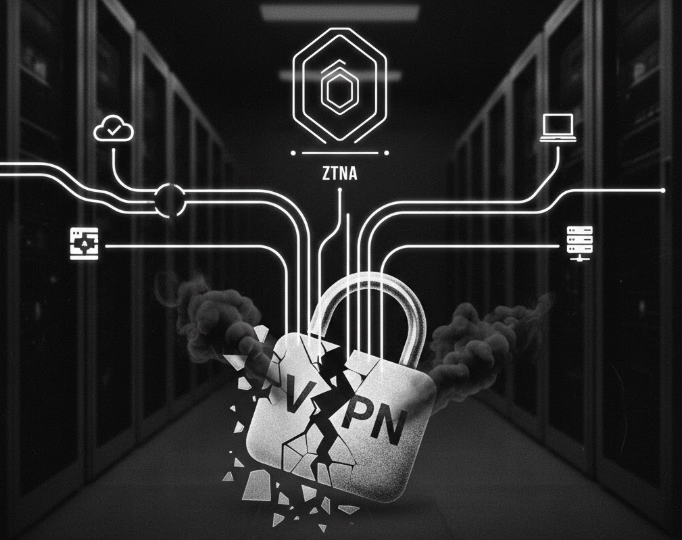
- Hardware Hardening: If your CCTV or HMI doesn't need to see the public internet, it shouldn't have a route to it. Use identity-aware proxies (IAPs) instead of flat VPNs.
- Audit Your SBOM: Know what’s inside your firmware. Recent supply chain attacks prove that the "trusted" vendor tool is often the Trojan horse.
Team Hacklido ❤️
Join our Community –
https://t.me/hacklido