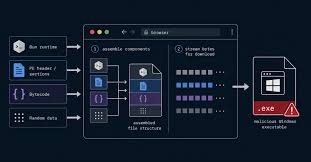
Cybersecurity researchers have uncovered a sophisticated malvertising campaign dubbed "SourTrade" that uses deceptive online advertisements to generate malicious executables directly within a victim's web browser. Instead of downloading a pre-built malware file, the campaign assembles the payload in real time using browser-based scripts, making detection by traditional security tools more difficult.
The attackers reportedly lure users through fake software updates, cracked applications, and sponsored search results. Once a victim interacts with the malicious page, JavaScript and WebAssembly (Wasm) components dynamically construct an executable, which can then be downloaded and executed on the victim's system.
Why It Matters
By building malware inside the browser, SourTrade reduces its reliance on static malicious files that are easier for antivirus engines to detect. This evolving technique highlights how cybercriminals are leveraging modern web technologies to bypass conventional security defenses and increase the success of malware delivery.
How to Stay Protected
Security experts recommend:
Download software only from official websites.
Avoid clicking sponsored links from unknown sources.
Keep browsers and security software up to date.
Enable endpoint protection capable of detecting behavioral threats.
Verify software installers before execution.
Conclusion
The SourTrade campaign demonstrates how malvertising continues to evolve, combining social engineering with browser-based malware generation to evade detection. As attackers adopt more advanced delivery techniques, organizations and users should remain cautious when downloading software and strengthen endpoint security against emerging browser-based threats.
GitHub and PyPI Introduce Time-Based Defenses to Strengthen Software Supply Chain Security
GitHub and the Python Package Index (PyPI) have introduced new time-based security measures designed to reduce the risk of software supply chain attacks. The initiative aims to prevent malicious actors from exploiting newly published packages or compromised maintainer accounts before suspicious activity can be detected.
The new protections introduce safeguards such as delayed trust for newly published packages and recently modified projects, giving security systems and maintainers additional time to identify malicious uploads before they are widely adopted. These measures are intended to mitigate common attacks, including typosquatting, dependency confusion, and the distribution of compromised open-source packages.
Security experts have welcomed the move, noting that software supply chain attacks continue to rise as attackers increasingly target open-source ecosystems used by millions of developers worldwide. By adding a time-based verification layer, GitHub and PyPI aim to make it more difficult for malicious packages to spread rapidly through automated development pipelines.
Why It Matters
Modern applications rely heavily on open-source libraries, making repositories like GitHub and PyPI attractive targets for cybercriminals. Time-based defenses provide an additional security layer that helps developers identify suspicious packages before integrating them into production environments.
Conclusion
The adoption of time-based protections by GitHub and PyPI marks another step toward improving open-source ecosystem security. While developers should continue verifying package authenticity, using dependency scanning tools, and keeping software updated, these new safeguards strengthen the industry's defense against increasingly sophisticated supply chain attacks.