For years, "Atmanirbhar Bharat" was a slogan for local assembly. But at the NXT Conclave 2026 today, industry leaders and defense experts delivered a blunt reality check: indigenization alone is not self-reliance. As global conflicts disrupt supply chains, India is pivoting toward a "Design Authority" model where the goal isn't just to build the tank, but to own the silicon and the software that runs it.
1. The 40% Localisation Wall
During a high level roundtable, M.D. Reddy of Astra Microwave revealed that while India is making strides, true localisation is currently hovering around 40%.
- The Semiconductor Bottleneck: The primary barrier to reaching 80–90% localisation is the lack of domestic foundries for defense grade chips.
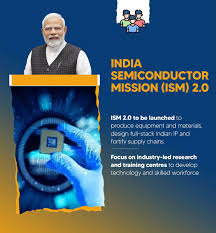
- ISM 2.0 to the Rescue: The newly announced India Semiconductor Mission (ISM) 2.0 (with its ₹8,000 crore outlay) is being framed as a defense mission in disguise. The focus has shifted from attracting foreign fabs to designing Indian-owned Intellectual Property (IP) for sensors and radars.
2. Defence Forces Vision 2047: Multi-Domain Warfare
Released just days ago, the "Defence Forces Vision 2047" roadmap outlines a radical restructuring of the Indian military to meet the "contactless" threats of the 2030s.
- New Institutions: The document calls for the creation of a dedicated Drone Force, a Space Command, and a Cognitive Warfare Action Force to counter grey-zone threats and disinformation.
- Proactive Deterrence: Chief of Army Staff General Upendra Dwivedi emphasized a shift from "reactive" to "proactive" deterrence, integrating data-driven warfare and unmanned robotic swarms as "battlefield equalisers."
3. The DeepTech Startup Revolution
The "Blue Chip" defense giants are no longer the only players. The iDEX (Innovations for Defence Excellence) scheme has successfully funded nearly 300 startups, many of which are now moving into the procurement phase.
- Autonomous Swarms: Smit Shah of the Drone Federation of India highlighted that future wars will be won by AI-driven swarms operating across aerial, surface, and underwater domains with minimal human intervention.
- Space as the High Ground: Experts at the conclave warned that space is becoming a "contested domain," with Indian startups now focusing on anti-jamming and satellite protection technologies.
Hacklido Technical Takeaway: The "Sovereign Stack"
For the developers and engineers on Hacklido, this shift creates a massive opportunity in three "sovereign" tech layers:
- RISC-V Architectures: To bypass Western and Chinese chip licensing, India is doubling down on the DIR-V (Digital India RISC-V) program. Developing for open-source silicon is now a matter of national security.
- Edge AI in the Field: The military needs "Inference at the Edge" AI that can run on a drone without needing a cloud connection (which can be jammed). This is where the NVIDIA "Feynman" rumors and Indian startups will likely intersect.
Encrypted Mesh Networks: With the rise of "Wiper" malware and MDM exploitation, the Indian defense stack is moving toward self-healing, encrypted mesh communications that don't rely on traditional internet infrastructure.