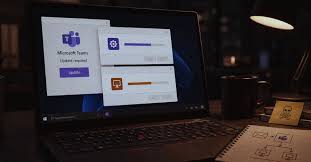
Cybersecurity researchers have uncovered "Operation BlueDash," a malicious campaign that abuses counterfeit Microsoft Teams update notifications to distribute malware. By impersonating legitimate software update prompts, attackers aim to trick users into downloading and executing malicious files, potentially leading to credential theft, remote access, or further compromise of corporate networks.
According to researchers, the campaign relies heavily on social engineering, exploiting users' trust in Microsoft's widely used collaboration platform. Victims who install the fake update may unknowingly grant attackers access to sensitive data, authentication credentials, or enterprise systems. The campaign highlights the growing trend of threat actors disguising malware as trusted software updates to bypass user suspicion.
Recommended Security Measures
Organizations and users should:
Download Microsoft Teams updates only through official Microsoft channels.
Verify update prompts before installing any software.
Enable Multi-Factor Authentication (MFA) for enterprise accounts.
Deploy Endpoint Detection and Response (EDR) solutions to identify suspicious activity.
Train employees to recognize fake update notifications and phishing attempts.
Why It Matters
Software update impersonation remains one of the most effective social engineering techniques. As collaboration platforms like Microsoft Teams become essential for business operations, attackers continue to exploit user trust to gain initial access to corporate environments.
Conclusion
Operation BlueDash demonstrates that fake software updates remain a powerful cyberattack vector. Organizations can reduce their risk by enforcing secure software update policies, strengthening endpoint security, and educating users about the dangers of counterfeit update campaigns.